Why Does My Water Leave White Marks?
Understanding Hard Water & Scale Build-Up

Hello Water Filtration
Water Quality Experts
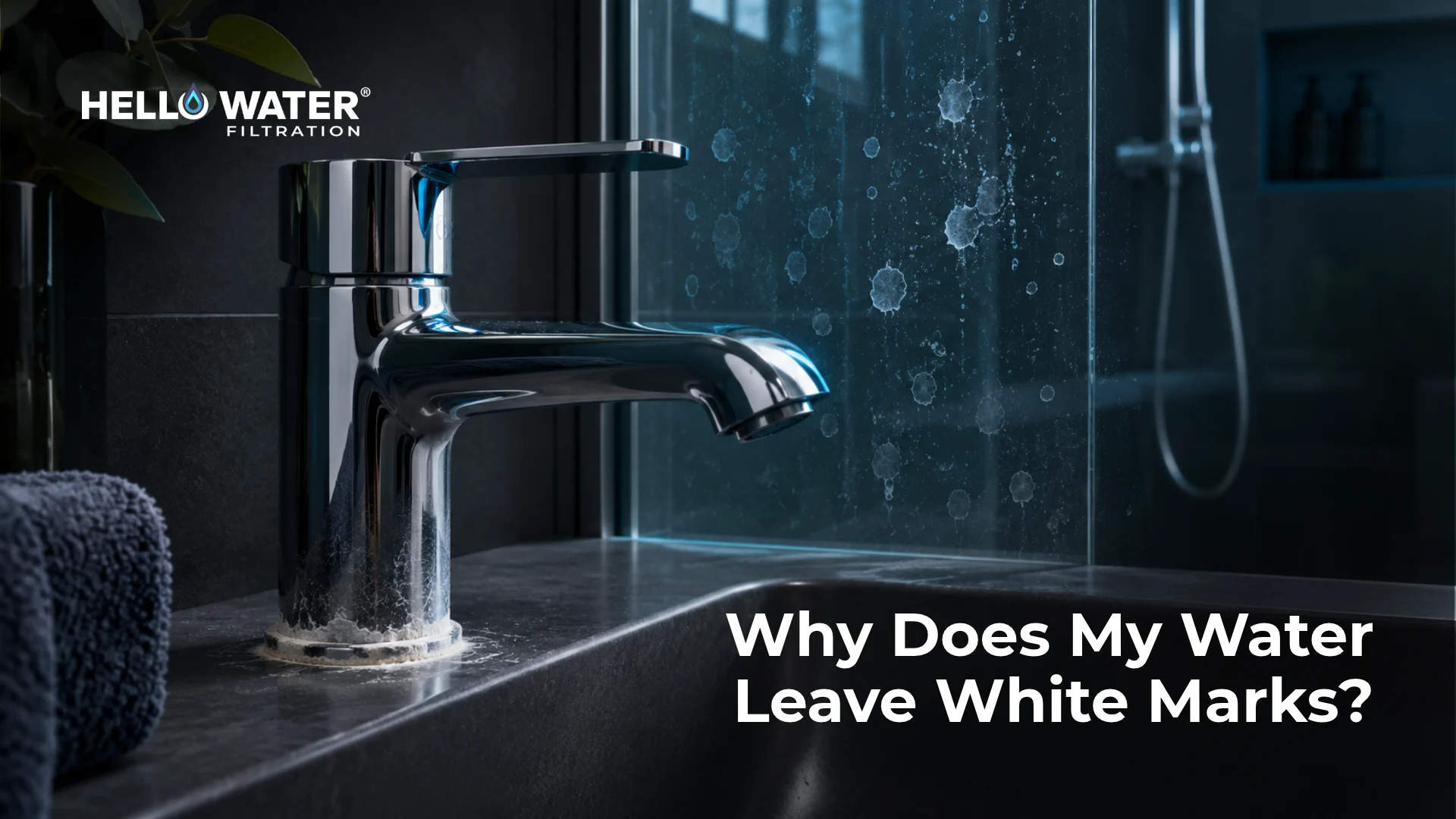
Have you ever cleaned your shower, taps or shower screen, only to see white spots or a chalky film reappear a few days later?
You may have hard water, which can leave mineral deposits as it dries.
Hard water is common in some parts of Australia. It contains higher levels of naturally occurring minerals, mainly calcium & magnesium. These minerals can leave visible deposits on household surfaces & cause scale to build up inside appliances.
What Causes Those White Marks?
When water evaporates from a surface, it can leave dissolved minerals behind. Over time, these minerals can build up into white spots, a cloudy film or chalky deposits on:
- Shower screens
- Taps & showerheads
- Sinks & basins
- Tiles
- Glassware
- Kitchen appliances
These deposits are often made up of calcium-containing scale. Heating water can increase scale build-up, which is why you may see heavier deposits inside kettles, hot water systems & other appliances that heat water.
What Exactly Is Hard Water?
Water hardness is determined mainly by the amount of dissolved calcium & magnesium in the water.
The Australian Drinking Water Guidelines describe hardness levels in milligrams per litre (mg/L), expressed as calcium carbonate (CaCO₃):
- Below 60 mg/L — Soft water
- 60–200 mg/L — Generally considered good quality
- 200–500 mg/L — Increasing problems with scale
- Above 500 mg/L — Severe scaling
The National Health & Medical Research Council (NHMRC) recommends keeping total hardness at or below 200 mg/L as calcium carbonate to minimise scale build-up in hot water systems. Hardness varies considerably across Australia’s major piped water supplies, from around 5 mg/L to about 380 mg/L.
Does Hard Water Mean Your Water Is Unsafe?
Water hardness describes the amount of calcium & magnesium in your water. Drinking water safety depends on its overall quality. The main concerns associated with hard water are scale build-up, effects on plumbing & appliances, and reduced soap lather.
How Hard Water Can Affect Your Home
Hard water can cause scale to build up inside pipes, fittings & hot water systems. Over time, scale can affect heating elements & contribute to blockages in plumbing components.
Hard water can also make soap harder to lather, so you may find yourself using more soap or detergent.
Around the home, you may notice:
- White deposits on taps & other fixtures
- Scale inside kettles & hot water appliances
- Soap that takes longer to lather
- Shower screens & bathroom surfaces that need more frequent cleaning
Can Water Filtration Help?
Many whole-home filtration systems are designed to reduce sediment, chlorine & chloramines, as well as improve taste & odour. These benefits depend on the filtration media used.
If hardness is your main concern, a dedicated water softener may be more appropriate. Water softening reduces the dissolved calcium & magnesium that cause hardness. Check whether the system you’re considering is specifically designed to soften water.
What Can You Do About White Marks?
If you’re regularly cleaning white deposits from your shower, taps or appliances, start by finding out how hard your local water supply is. Knowing the hardness level can help you choose a treatment suited to your home.
At Hello Water Filtration, we help homeowners understand their water quality & choose a system that suits their needs. Whole-home filtration can address concerns such as sediment, chlorine, taste & odour throughout your home. If hardness is the main issue, we can help you understand when dedicated water softening may be more suitable.
Tired of cleaning white marks from your taps & shower? Speak with the Hello Water Filtration team about your water supply & the options for your home.